1940s
Actuarial – Snippets – 1900-1940s
1900-1940s - Actuarial - Snippets
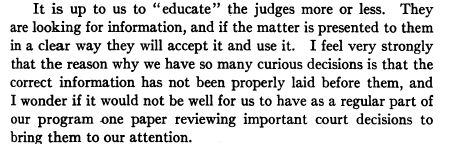
-- Mr. Anderson - (p261)
1919 - The Record, American Institute of Actuaries - Individual Reserves in Life Insurance - [Educate Judges] - [PDF- 451p-GooglePlay]
- The ... company is to determine for itself which of its plans are to be treated as term insurance and which as permanent.
- The original instructions gave as a suggested definition of term insurance "that it is any policy with a premium rate less than 90% of the no profits rate for Ordinary Life...
1949 - SOA - Report of the Committee on Mortality Under Ordinary Insurances and Annuities, Society of Actuaries - 12p
1940s – Index
1940s – Index
#
- 1900 – 1949 – Newspapers
- 1938-1941 – GOV (Senate) – TNEC – Temporary National Economic Committee – Joseph O’Mahoney (D-WY)
- 1940s – Index
- 1940-0, NAIC Proceedings
- 1941 – GOV (Senate-Report) – TNEC – Final Report and Recommendations of the Temporary National Economic Committee, Investigation of Concentration of Economic Power – Joseph C. O’Mahoney (D-WY)
- 1942-Supplement, NAIC Proceedings – Reports and Statements on Non-Forfeiture Benefits and Related Matters
TNEC – Temporary National Economic Committee
TNEC – Temporary National Economic Committee
- 1938-1941 – GOV (Senate) – TNEC – Temporary National Economic Committee, Joseph C. O’Mahoney (D-WY) — [BonkNote]
- 1941 – GOV (Senate) – TNEC – Final Report and Recommendations of the Temporary National Economic Committee, Investigation of Concentration of Economic Power – 464p
- (p269) – Life insurance funds are not venture capital; they are seeking safe, long-term investments, preferably the bonds of well-established enterprises or ….
- Dr. Dewey Anderson, executive secretary of the Temporary National Economic Committee
1942-Supplement, NAIC Proceedings – Reports and Statements on Non-Forfeiture Benefits and Related Matters
1942-Supplement, NAIC Proceedings – Reports and Statements on Non-Forfeiture Benefits and Related Matters
-
1942-Supplement, NAIC Proceedings – Reports and Statements on Non-Forfeiture Benefits and Related Matters — [BonkNote]
- (p91) – THE “CASH” NON-FORFEITURE BENEFIT
- The development of level premium whole life insurance, limited premium policies and policies on the endowment plan maturing in the policyholder’s lifetime and, later, short-term endowment contracts on the single premium plan, has resulted in the requirement for the accumulation of substantial reserves.
- It was recognized early by most life insurance companies that it was unconscionable to confiscate or cause the forfeiture of such reserves in their entirety.
- On the other hand, for very satisfactory reasons it was not deemed an equitable procedure to compel a company to give the outgoing policyholder, in every case, ·the whole reserve held on the policy.
- Term Policies
- Policies written for a term of less than twenty years. are not now usually required to contain a non-forfeiture benefit.
- If there is a substantial accumulation on any such policy, there is ho good reason why the insured should be deprived thereof.
- (p100) – THE “Insurance” NON-FORFEITURE BENEFIT
- The paid-up insurance option might be described as the allowance upon lapse of a smaller amount of insurance on the whole life or endowment plan, similar to that provided for in the original policy, the amount of insurance being the variable depending upon the length of time premiums were paid, the plan of the original policy and other factors affecting the value of the original policy at lapse.
- Under the extended insurance option, the amount of insurance is held at the same figure as in the original policy, subject to reduction on account of indebtedness, but the plan is changed to term insurance of such length that the value thereof is approximately equal to the value of the policy.
- (p138/140) – Slight modifications in rates were made at ages 96-98 in order to make the mortality rate at age 99 equal to unity and establish age 100 ·as the limiting age of the table.
- (p158) – Whenever the plan or term of a policy shall have been changed, either by request of the insured or automatically in accordance with a provision of the policy, the date of inception of the changed policy, for the purpose of determining the cash surrender value, shall be the date as of which the rated age of the insured is determined under the changed policy.
1941 – GOV (Senate-Report) – TNEC – Final Report and Recommendations of the Temporary National Economic Committee, Investigation of Concentration of Economic Power – Joseph C. O’Mahoney (D-WY)
1941 – GOV (Senate – TNEC) – Final Report and Recommendations of the Temporary National Economic Committee, Investigation of Concentration of Economic Power – 464p
- 1941 – GOV (Senate) – TNEC – Final Report and Recommendations of the Temporary National Economic Committee, Investigation of Concentration of Economic Power – 464p
- (p269) – Life insurance funds are not venture capital; they are seeking safe, long-term investments, preferably the bonds of well-established enterprises or ….
- TNEC – Temporary National Economic Committee
- Joseph C. O’Mahoney (D-WY) – Chairman
United States v. South-Eastern Underwriters Association
United States vs. South-Eastern Underwriters Association
- 1944 – LC – UNITED STATES v. SOUTH-EASTERN UNDERWRITERS ASSOCIATION (SEUA) ET AL., APPEAL FROM THE DISTRICT COURT OF THE UNITED STATES FOR THE NORTHERN DISTRICT OF GEORGIA., No. 354. Argued January 11, 1944.-Decided June 5, 1944 – 63p
SOA – Society of Actuaries – 1940s
1940s - SOA - Society of Actuaries
- <WishList> - 1947 - SOA / TASA - Electronic Machinery for Handling Information, and Its Uses in Insurance, by Edmund C. Berkeley, Transactions of the Actuarial Society of America 48 (1947): 36-52
- 45 William P. Barber, Jr., Edward H. Wells, and Edward A. Rieder, Discussion of "Electronic Machinery for Handling Information," Berkeley Papers, box 68.
- X - 1949 - SOA - DIVIDENDS - Society of Actuaries - tsa49v1n116
- X - 1949 - SOA - Report of the Committee on Mortality Under Ordinary Insurances and Annuities, tsa49v1n124 - Society of Actuaries - 12p
- X - 1949 - SOA - Term Conversion Option, Elgin G. Fassel, tsa49v1n17 - Society of Actuaries - 42p
- X - 1949 - SOA - Some Actuarial Observations on Agency Management Problems, tsa49v1n16 - by Charles F. B. Richardson, Society of Actuaries - 46p
- <WishList>
- Edward A. Rieder (TASA XLVIII, 1947, p. 283)
- Edward A. Rieder, "A Method For Grading. Commission Scales By Plan And Age At Issue,". Record of the American Institute of Actuaries,. Vol. XXIX (1943)
- 45 William P. Barber, Jr., Edward H. Wells, and Edward A. Rieder, Discussion of "Electronic Machinery for Handling Information," Berkeley Papers, box 68.
- Edmund C. Berkeley, "Electronic Machinery for Handling Information, and Its Uses in Insurance," Transactions of the Actuarial Society of America 48 (1947): 36-52.
- 45 William P. Barber, Jr., Edward H. Wells, and Edward A. Rieder, Discussion of "Electronic Machinery for Handling Information," Berkeley Papers, box 68.
Government Hearings – 1940s
Government Hearings – 1940s
Verbatim Record of the Proceedingsgoogle.com
https://books.google.com › books
United States. Temporary National Economic Committee · 1940 · Corporations
… Life Insurance Co. 193-194 , 201 , 213 American Bank , Port Clinton , Ohio … Hercules Life Insurance Co. , Chi- ….. cago Home Life Insurance Co. , Little …
- 1942 – GOV (House) – Hearings on Revenue Revision of 1942, Robert L. Doughton (D-NC)
- House – Committee on Ways and Means
- 31 Parts
- https://catalog.hathitrust.org/Record/100953064
- Grant Taggart – Part 2
- Statement of Taggart, Grant, Cowley, Wyo …. 2382
- Part 1 – 1942 0303
- Part 2 – 1942 MARCH 25, 26, 27, 30, 31, APRIL 1, 2, 3, 7, 8, and 9 – GOV (House) – Hearings on Revenue Revision of 1942 – Volume – 2 – 1209p – [GooglePlay-link]
- Part 31 – 1942 0417 –
- 1943 1020,1027 and 1103 – GOV (Senate) – Insurance
- [PDF-GooglePlay-671p
- Senate – Committee on the Judiciary
-
S. 1362, H. R. 3269, and H. R. 3270
-
Bills To Affirm The Intent Of Congress That The Regulation Of The Business Of Insurance Remain Within The Control Of The Several States And That The Acts Of July 2, 1890, And October 15, 1914, As Amended, Be Not Applicable To That Business
- McCarran-Ferguson
- Business of Insurance
- 1947 0604 and 0625 – GOV – (House) – Amendments to Laws Pertaining to National Service Life Insurance
- GooglePlay
- House – Committee on Veterans’ Affairs – Subcommittee on Insurance
- 1949 01 – (GOV – Joint) – January 1949 Economic Report of the President – [PDF-698p]
1940-0, NAIC Proceedings
1940-0, NAIC Proceedings
- Special Committees-Liquidation and Reorganization
- Special SEC Committee
- (Mr. Gontrum then read his prepared address, which follows)
- I have chosen as my subject “Insurance Advisors” rather than “Insurance Counselors” because I wished to include in the scope of this paper the three main classes of individuals and organizations that undertake to give advice on insurance matters.
- The term ”Counselors” has in recent years taken on a special meaning restricting it to a small group of individuals who are now rather much in the public eye and ear.
- The three groups to which I shall refer are: First, Insurance Counselors; Second, Insurance Companies and Agents; Third, State Insurance Officials. (p18)
1940-0, NAIC Proceedings
- Most life insurance companies, ·it is true, will cancel the contract of an agent found guilty of replacing a policy already carried in. his own or another coinpany, by a new policy and such a practice is usually referred to as “twisting.” (p21)
1940-0, NAIC Proceeding
- Prior to· the end of the nineteenth century it had been necessary for all companies to use the method of valuation of policies then provided by law on what was known as the net level premium plan.
- Under this plan it was extremely difficult to organize and develop new companies and there has been very few new life insurance companies organized prior thereto.
- Beginning with the twentieth century a number of the Western states provided by law for the valuation of policies of companies upon what was known as the preliminary term or modified preliminary term basis, and it was these laws that permitted the organization and rapid growth of many companies throughout the Western and Southern states, as shown by the growth of companies on the schedules attached hereto, marked Exhibit “A”. (p168)
1940-0, NAIC Proceedings
- Recent history has furnished a most impressive example of the Convention leadership followed by the state departments in the matter of uniform moratorium regulations on policy loans and cash surrenders and their adoption during and following the bank holiday in 1933, by the states with only such slight variations from the National Convention model as were required by conditions in each state.
- Meeting the excessive demands for cash surrender values and policy loans by living policyholders was made difficult, if not impossible, by the breakdown of banking facilities, throughout the country, and concerted action became necessary to prevent the precipitation of a crisis.
- In March, 1933, emergency laws were passed in a majority of the states· and supervisory officials issued regulations in accordance therewith to meet the situation in the best interest of· policyholders by placing certain temporary restrictions on the withdrawal of policy values.
- A special meeting of the National Convention convened
in Chicago on April 7, 1933, where, after two days of deliberation, resolutions were adopted which eventually led to a set of standardized regulations. - Concerted action on this occasion forestalled confusion. The best interests of policyholders were protected with no interference· in the primary purpose of life insurance, i.e., protection against hazard of death, death claims, endowment maturities and installments due under optional settlement provisions.
- The restrictions placed upon the withdrawal of surrender values were graduaUy relaxed and ultimately discontinued altogether.
- The action of the National Convention in this emergency was marked by such promptness, vigilance and good judgment as to command the admiration of all. (p166-167)
1940-0, NAIC Proceedings
McCarran-Ferguson Act
McCarran-Ferguson Act
- 1945 – Congress – McCarran-Ferguson Act of 1945
- Senator Homer Ferguson (R-MI) – 1943-1955
- Senator Pat McCarran (D-NV) – 1933-1954
- 1869 – LC – Paul v. Virginia
- 1944 – LC – United States v. South-Eastern Underwriters Association – United States Supreme Court
- It is important to note that McCarran is a power-sharing statute that reflects Congress’ judgment to delegate, not abdicate, authority over insurers to States that regulate the business of insurance themselves. (p6)
— Marc Racicot, Former Governor of Montana, President, American Insurance Association (AIA)
2006 0620 – GOV (Senate) – The Mccarran-Ferguson Act: Implications of Repealing the Insurers’ Antitrust Exemption, S. Hrg. 109-557 – [PDF-160p, VIDEO-?]
- naic.org/cipr_topics/topic_mccarran_ferguson_act.htm
- 1977 – DOJ – The Pricing and Marketing of Insurance: A Report of the U.S. Department of Justice to the Task Group on Antitrust Immunities – [401p-GooglePlay]
- (piv) – The basic question under study was whether continuation of the present exemption of the business of insurance from the federal antitrust laws , by virtue of the McCarran Act and state regulation , is in the public interest.
- 1987 – LR – The McCarran-Ferguson Controversy: Should Problems In State Regulatory Departments Trigger Federal Reform?, by Jeffrey L. Schrader – 13p
- 1945 0125 – Congressional Record – congress.gov/79/crecb/1945/01/25/GPO-CRECB-1945-pt1-15.pdf
- (p17) – REGULATION OF THE BUSINESS OF INSURANCE
- The LEGISLATIVE CLERK. A bill (S. 340) in its opinion in the case of United States to express the intent of the Congress with reference to the regulation of the business of insurance.
- (p17) – REGULATION OF THE BUSINESS OF INSURANCE
-
-
-
Kenneth McKELLAR (D-TN) – As I understand the bill its purpose and effect will be to establish the law as it was supposed to be prior to the rendering of the recent opinion of the Supreme Court of the United States. Is that correct?
-
Homer FERGUSON (R-MI) – No.
- …
-
In other words, the bill would establish a moratorium on the application of the provisions of those acts until the date set forth in the bill.
-
-
-
-
- Abe MURDOCK (D-UT) – Let us look at that phase of the subject for a minute. We new leave section 2 of the bill and drop down to section 4.
- Paragraph (a) of section 4 provides for a moratorium, or a suspension of the Sherman and Clayton Acts insofar as they relate to insurance, for a period, respectively, until June 1, 1947, so far as the Sherman Act is concerned, and until January 1, 1948, so far as the Clayton Act is concerned.
- Homer FERGUSON (R-MI) – The Senator is correct
- Abe MURDOCK (D-UT) – Let us look at that phase of the subject for a minute. We new leave section 2 of the bill and drop down to section 4.
-
-
-
- (p483) – Joseph C. O’Mahoney (D-WY) – The Senator puts his finger upon the precise center of this dispute, or misunderstanding.
- …
- It is no secret that Senate bill 12, introduced by the Senator from New Mexico [Mr. HATCH] and myself, and Senate Bill 340, the bill which was reported by the committee, are modifications of a measure which was originally drafted by the legislative committee of the National Association of Insurance Commissioners. [NAIC]
- So there was an effort to work with those groups. In drafting those two bills we sought to spell out each particular law which might apply to insurance. We referred specifically to the Federal Trade Commission Act, the Robinson-Patman Act, the National Labor Relations Act, and the Fair Labor Standards Act.
- In other words a good-faith attempt was made to specify every single law which had an application, or might have an application, to insurance.
- (p483) – Joseph C. O’Mahoney (D-WY) – The Senator puts his finger upon the precise center of this dispute, or misunderstanding.
-
- 1987 0421, 0428, and 0429 – GOV (House) – Current State of the Liability Insurance Crisis
- [PDF- 313p-GooglePlay, VIDEO-?]
- Testimony – Daniel Oliver, Chairman of the FTC – p242-260
- Letter – FTC to GOV – p290-291
- Chairman La Falce has requested information on the circumstances that led to enactment of the 1980 amendment to the Federal Trade Commission Act that prohibits the Commission from studying the business of insurance .
- (p288) – Chairman LAFALCE. All right, fine. I would also like you to supply for the record, a statement as to why the FTC believes it lost its authority in 1980, that is, what was the FTC doing in that era?
- Mr. OLIVER. I am told that it resulted from a study that the Commission did on how good an investment life insurance was, the staff study.
- I understand that it was a staff study that concluded that buying life insurance was not a good investment.
- Chairman LAFALCE. The insurance industry did not like that, and therefore they got enough Members of Congress to support their position.
- Mr. OLIVER. I think that is correct.
- House – Committee on Small Business
- (p71) – If you want to do something to help the regulation of insurance and to help the policyholders, then cut through the case law and amend McCarran-Ferguson to precisely state that “the business of insurance ” includes insolvency proceedings.
— Karl L. Rubenstein, Special Deputy Insurance Commissioner, State of California
1988 0914 and 0915 – GOV (House) – Insurance Company Failures – [PDF-4xxp-GooglePlay, VIDEO-?] — [BonkNote]
- 1991 – CQ Almanac – Insurance Industry Kept Exemptions – library.cqpress.com/cqalmanac/document.php?id=cqal91-1110263
- Document Outline – House Subcommittee Action – House Committee Action
- A bill to roll back some of the insurance industry’s exemptions from federal antitrust laws advanced through the House Judiciary Committee too late in the session to be considered on the House floor. A companion measure was introduced in the Senate.
- Insurers had been exempt for 46 years under the McCarran-Ferguson Act, but critics led by Rep. Jack Brooks, D-Texas said the industry did not deserve special legal protection.
- Brooks advanced his assault on the insurance industry Nov. 19 when the Judiciary Committee he chaired voted 19-14 to report HR 9, which would end many longstanding insurance industry exemptions from antitrust laws under the 1945 law.
- 2006 0626 – GOV (House) – The McCarran-Ferguson Act: Implications Of Repealing The Insurers’ Antitrust Exemption, S. Hrg. 109-557 – [PDF-160p, VIDEO-?]
- J. Robert Hunter, Insurance Director, Consumer Federation of America, Washington, D.C
- Michael McRaith, as Illinois Director of Insurance, Chair, Broker Activities Task Force
- (p23) – Hunter: I would like to comment on one thing.
- There were huge life insurance market conduct violations with billions of dollars paid by MET Life, Prudential and others a few years ago.
- I do not think there were any criminal charges brought in any of that.
- I really do think that that Chairman Specter’s idea of calling for what has happened in terms of actual numbers of criminal charges is very important information, and I hope the NAIC would help with that as well.