Posts by Bonk
1980s – Index
1980s – Index
L
M
P
#
- 1889-1989 – SOA – Cowman Index to Actuarial Literature – Society of Actuaries
- 1970s – 1980s – LIBG – Life Insurance Buyer’s Guide – Wisconsin
- 1980s – AAA to NAIC
- 1980s – ACLI to NAIC
- 1980s – ACLI – NAIC Proceedings
- 1980s – ACLI – Snippets
- 1980s – Actuarial – Snippets
- 1980s – Index
- 1980s – NAIC – Insurance Commissioners – Snippets
- 1980s – Newspapers
- 1980s – Prudential Insurance Company – Snippets
- 1980s – SOA to ACLI
- 1980s – SOA – Society of Actuaries
- 1980 0320 – GOV (Senate) – Cancer Insurance and the Elderly, Birch Bayh (D-IN)
- 1980 0627 – NP – Toledo Blade – Insurance-Hearing Pressure Detailed – [Howard Metzenbaum] – by Frank Kane
- 1980 0808 – NYT – Filling a Gap at California Life, by Leonard Sloane
- 1980 1116 – NP – Fort Lauderdale News – A.L. Williams Grows Despite Controversy, by Karen Southwick
- 1980-1, NAIC Proceedings
- 1980-2, NAIC Proceedings
- 1980-4, NAIC Proceedings
- 1981 0118 – NP – The Palm Beach Post – Policy Warfare: Term vs. Whole Life, by Leonard Sandler
- 1981 0511 – Ventura County Star / NYT – ‘Universal’ insurance making gains
- 1981 0927 – NP – The Los Angeles Times – Northwestern Mutual Life – AD – Are You Ready to Take the Plunge?
- 1981-1, NAIC Proceedings
- 1981-1, NAIC Proceedings – Task Force on Life Insurance Disclosure System – LIDS – NAIC
- 1981-2, NAIC Proceedings
- 1981-4, NAIC Proceedings
- 1982 – GOV (Senate) – Administration’s Fiscal Year 1983 Budget Proposal, Bob Dole (R-KS)
- 1982 – TEFRA – Tax Equity and Fiscal Responsibility Act of 1982
- 1982 0103 – NP – The News and Observer – N.C. Attorney General Probes Insurance Firm – [A.L. Williams]
- 1982 0104 – NP – The Charlotte News – N.C. checks insurance firm after ‘pyramid’ questions – [A.L. Williams]
- 1982 0612 – NP – Omaha World-Herald – Plan Uses Life Insurance Loans – Called ‘Idle Assets’
- 1982 0713 – NP – Chicago Tribune – Universal Life Insurance Trapped Between IRS, Congress
- 1982 0715 – GOV (Senate) – Fair Insurance Practices Act – Bob Packwood (R-OR)
- 1982-1, NAIC Proceedings
- 1982-2, NAIC Proceedings
- 1983 – CR -Congressional Record
- 1983-1, NAIC Proceedings
- 1983-2, NAIC Proceedings
- 1983-4, NAIC Proceedings
- 1983 0311 – GOV (Senate) – Taxation of Financial Services Industry – Bob Dole (R-KS)
- 1983 0510, 0511 and 0728 – GOV (House) – Tax Treatment of Life Insurance – Pete Stark (D-CA)
- 1984 – DEFRA – Deficit Reduction Act of 1984
- 1984 05 – MG – Changing Times – Adjustable Life Insurance – Bankers Life
- 1984-1, NAIC Proceedings
- 1984-2, NAIC Proceedings
- 1985 – FTC – Report – Life Insurance Products and Consumer Information
- 1985 0719 – GOV (House) – Comprehensive Tax Reform – Pete Stark (D-CA)
- 1985-1B, NAIC Proceedings
- 1985-1, NAIC Proceedings
- 1986 – ArtWilliamsBest – Fake News – [A.L. Williams] – [VIDEO-YouTube-20:11]
- 1986-1, NAIC Proceedings
- 1986-2, NAIC Proceedings
- 1987 – GOV (House) – Developments In State Insurance Regulation – James Florio (D-NJ)
- 1987-1, NAIC Proceedings
- 1987-2, NAIC Proceedings
- 1988 0726 – GOV (Senate) – Financial Planners and Investment Advisers – Chris Dodd (D-CT)
- 1988-1. NAIC Proceedings
- 1988-2, NAIC Proceedings
- 1988 0325 – GOV (Senate) – Tax Treatment of Single-Premium Life Insurance – Max Baucus (D-MT)
- 1988 0914 and 0915 – GOV (House) – Insurance Company Failures – John Dingell (D-MI)
- 1989 0501 – National Press Club – Where Was the Press During the S&L Crisis? – CSPAN
- 1989 0526 – NP – The Atlanta Constitution – Tennessee Assails A.L. Williams Marketing Practices
- 1989 0901 – NP – The Atlanta Constitution – Calif. Won’t Punish A.L. Williams Unit, by Peter Mantius
- 1989 10 – MG – Changing Times – Adjustable Life Insurance – Principal Life
- 1989-1, NAIC Proceedings
- 1989-2, NAIC Proceedings
- 1989 1019 – GOV (House) – Life Insurance Company Taxation – Charles Rangel (D-NY)
1970s – Index
1970s – Index
L
#
- 1970s – ACLI – American Council of Life Insurers – Snippets
- 1970s – Actuarial – Snippets
- 1970s – Government Hearings – Snippets
- 1970s – Index
- 1970s – NAIC – Insurance Commissioners – Government Hearings
- 1970s – NAIC – Insurance Commissioners – Snippets
- 1970s – Newspapers
- 1970s – SOA – Society of Actuaries
- 1970s – 1980s – LIBG – Life Insurance Buyer’s Guide – Wisconsin
- 1970 – GOV (Senate) – Consumer Protection – Parts 1 and 2 – Frank Moss – (D-UT)
- 1970 – Joint Special Committee of Life Insurance Costs
- 1973 – SEC – Variable Life Insurance and the Petition for the Issuance and Amendment of Exemptive Rules, Securities and Exchange Commission – 205p
- 1973 – 1974 – GOV (Senate) – The Life Insurance Industry – Philip Hart (D-MI)
- 1973 – GOV (Senate) – Consumer Redress – John V. Tunney (R-CA)
- 1973 0220 – GOV (Senate) – The Life Insurance Industry – Part 1 of 4 – Philip Hart (D-MI)
- 1973 0306 – NP – New Finance Giant is Coming to Life – [Variable Life Insurance], by Carlton Smith
- 1973 1101 – NP – Denton Record-Chronicle – City Firms Named In SEC Action
- 1973-1, NAIC Proceedings
- 1973 0221 and 0222 – GOV (Senate) – The Life Insurance Industry – Part 2 of 4 – Philip Hart (D-MI)
- 1973 0223 – GOV (Senate) – The Life Insurance Industry – Part 3 of 4 – Philip Hart (D-MI)
- 1974 0716 – GOV (Senate) – The Life Insurance Industry – Part 4 of 4 – Philip Hart (D-MI)
- 1974 1013 – NP – Denton Record-Chronicle – Man Brings Suit on 17 Defendants
- 1974-1, NAIC Proceedings
- 1974-2, NAIC Proceedings
- 1974 0710 – GOV (Senate) – Pyramid Sales – Frank E. Moss (D-UT)
- 1975 – GOV (Senate) – Veterans Insurance Information Disclosure – Richard Stone (D-FL)
- 1975-4, NAIC Proceedings
- 1976-4, NAIC Proceedings
- 1977 – GOV (Senate) – Federal Insurance Act of 1977 – William Proxmire (D-WI)
- 1977 10 – MG – Changing Times – Adjustable Life Insurance – (p17-19)
- 1978 – GOV (House) – Life Insurance Marketing and Cost Disclosure – John Moss (D-CA)
- 1978 – GOV (House) – Life Insurance Marketing and Cost Disclosure – John Moss (D-CA)
- 1978 – GOV (Senate) – Rights and Remedies of Insurance Policyholders – Howard Metzenbaum (D-OH)
- 1978 1112 – NP – The Atlanta Constitution – New ‘Deposit Term’ Insurance Creating Uproar in Industry – [A.L. Williams], by Joe Ledlie
- 1978 12 – GOV (House) – Life Insurance Marketing and Cost Disclosure Report Together with Dissenting Views – John Moss (D-CA)
- 1979 – FTC – Report – Life Insurance Cost Disclosure, Federal Trade Commission – 460p
- 1979 – GOV (Senate) – Oversight of the Federal Trade Commission – Wendell Ford (D-KY)
- 1979 1011 and 1022 – GOV (House) – Small Business Problems with Insurance – Part 1 – John LaFalce (D-NY)
- 1979 1025 – NP – The Indianapolis News – The Great FTC / Insurance Battle, by John Cunniff
- 1979 1213 – NP – The Atlanta Journal – Football Coach Becomes Insurance ‘Maverick’ – Art Williams – p19-20 and 24
- 1979 0524 – GOV (Senate) – Cost Disclosure in Life Insurance – Howard Metzenbaum (D-OH)
- 1979 0710 and 1017 – GOV (Senate) – FTC Study of Life Insurance Cost Disclosure – Howard Cannon (D-NV)
- 1979 0930 – NYT – The Appeal of Life Insurance Fades, But Most Families Still Buy It, By Edwin McDowell
Graded Premiums
Graded Premiums
- 1959 – SOA – Discussion of Subjects of Special Interest – Graded Premiums, Society of Actuaries VOL. 11 NO. 29AB – 6p
1982 0612 – NP – Omaha World-Herald – Plan Uses Life Insurance Loans – Called ‘Idle Assets’
1982 0612 – NP – Omaha World-Herald – Plan Uses Life Insurance Loans – Called ‘Idle Assets’
- 1982 0612 – NP – Omaha World-Herald Plan Uses Life Insurance Loans – Called ‘Idle Assets’, by Linda Brenners-Stulberg, The Chicago Sun-Times — [BonkNote]


Retirement Income Plan
Retirement Income Plan
- retirement income policies
- retirement income endow- ment policy
- Retirement income at 65
- retirement income type contracts
- retirement income life insurance
- Retirement income plans
- retirement income policy
- In the past decade or so, the once-sharp distinction between insured pension plans and non-insured pension plans has greatly diminished. Now, it is perhaps more meaningful to discuss a spectrum rather than a dichotomy.
- While many plans do not involve an insurance company, many others do, to one degree or another. Any such involvement may permit a plan to be classified as split-funding. “Split-Funding” has become such a broad term that it has definitely lost some of its usefulness. For the purpose of this discussion, let me simply address myself to the subject of participation by the insurance industry in the multi-billion dollar process of establishing and maintaining pension plans.
- At the risk of boring most of you in the audience, I would like to begin with some elementary concepts.
- In earlier days, pensions might be funded by the purchase of retirement income policies, where the monthly income at retirement may be 1% to 2% of the face amount of the policy, or by the purchase of some other form of endowment policies. It is still a common practice to fund with relatively high cash value ordinary life policies (when pre-retirement death benefits are desired) along with an auxiliary fund. Most of the risks are transferred to the insurance company and most of the services are performed by the insurance company. At retirement, annuities are purchased to provide the regular benefits, risk-free to the plan sponsor.
- [MORE]
- Then came the development of the deposit administration contract, primarily a Group product. Where the Individual side is concerned, more and more emphasis is placed on auxiliary funds to the extent that such funds may be considered small DA’s. DA’s involve the buildup of a fund deposited with an insurance company. The deposits are based on contribution amounts that are determined each year by the use of some funding method and consist of usually the normal cost plus some amortization of the past service cost. The fund is not allocated to active lives prior to retirement. At retirement, annuities are purchased at guaranteed premium rates.
— Yuan Chang
1976 – SOA – Pension Funding Vehicles, rsa76v2n311 – Society of Actuaries – 18p


2024 0728 – Always Marco – Exposing The Big Lie of Multi-Level Marketing – [VIDEO-YouTube-15:05]
2024 0728 – Always Marco – Exposing The Big Lie of Multi-Level Marketing – [YouTube-15:05]
- 2024 0728 – Always Marco – Exposing The Big Lie of Multi-Level Marketing — [BonkNote] — [YouTube-15:05]
- 0 – mlmconf2023.org/conference-videos/ – College of New Jersey
- 2023 0323 – Always Marco – I Confronted The FTC About Pyramid Schemes – [VIDEO-YouTube-19:50]
- 0-2 – Doublespeak
- 2015 / 1989 – Book – Doublespeak, by William Lutz – 280p
- 1925 – Book – Mein Kampf, by Adolf Hitler
- 1949 – Book – 1984, by George Orwell
- 2-5 – MLM – Multi-level Marketing – The Big Lie
- 2012 – CAI – Consumer Awareness Institute – The Case (For and) Against Multi-Level Marketing, by Jon Taylor – 381p
- 2017 – CAI – Consumer Awareness Institute – Multi-Level Marketing Unmasked – Why Multilevel Marketing Is Unfair and Deceptive, By Jon M. Taylor, MBA, Ph.D. – 476p
- DSA – Direct Selling Association
- 2024 – DSA – National Consumer Protection Week – linkedin.com/posts/direct-selling-association_ncpw2024-dssrc-activity-7171172750722494465-M11w/
- TINA.org – Truth in Advertising
- 2023 – mlmconf2023.org/
- 2023 0323 – Always Marco – I Confronted The FTC About Pyramid Schemes – [VIDEO-YouTube-19:50]
- What I should have said…
- FTC vs. DOJ, Department of Justice
- 2012 – CAI – Consumer Awareness Institute – The Case (For and) Against Multi-Level Marketing, by Jon Taylor – 381p
- 5 – Words
- 6 – 2016 1107 – LastWeekTonight – Multilevel Marketing: Last Week Tonight with John Oliver (HBO) – [VIDEO-YouTube-31:57]
- 6 – VIDEO Clip – MLM, Network Marketing, Affiliate Selling, Social Selling
- 7 – Revisionist History – 1984 – Book
- 8 – Lawsuits, Harassment, Family
- 2023 – Lawsuit – Primerica vs. Marco Moukhaiber – [Always Marco] — [BonkNote]
- 2023 0720 – LC – Statement of Claim – Injunction – Primerica – Marco Mouhkaiber – [Always Marco] — [BonkNote] — 12p
- p5 – (h) – On July 14, 2023, Mr. Moukhaiber posted a video entitled “Infiltrating a Pyramid Scheme: Primerica” to YouTube. — In this video, Mr. Moukhaiber states among other things that Primerica is a “commercial cult.” This video includes multiple factual inaccuracies.
- 2023 – Always Marco] – Infiltrating a Pyramid Schemeam: Primerica – [VIDEO-YouTube-42:34]
- 2023 0720 – LC – Statement of Claim – Injunction – Primerica – Marco Mouhkaiber – [Always Marco] — [BonkNote] — 12p
- 2023 – Lawsuit – Primerica vs. Marco Moukhaiber – [Always Marco] — [BonkNote]
- – MLM vs. Scientology
- 10 – FTC – Lina Kahn
- 2024 – The Daily Show – Lina Khan – FTC Chair on Amazon Antitrust Lawsuit & AI Oversight – [VIDEO-YouTube-21:07]
- 10 – 1979 – FTC – Amway
- 1979 – LC – In the Matter of Amway Corporation, Inc, et al, Final Order, Opinion, etc. in Regard to Alleged Violation of the Federal Trade Commission Act – Docket 902 – Complaint, March 25, 1975 – Final Order, May 8, 1979 – 121p
- 10 – FTC – Edith Ramirez – Herbalife
- 2016 0720 – Facts About Herbalife – Herbalife CEO Michael Johnson and FTC Chairwoman Ramirez – [VIDEO-YouTube-04:55]
- 10 – Regulatory Capture
- 12 – Employee – Volunteer – Slave – MLM “Distributor”
- 13 – DoubleSpeak – Academics
- 15 – Don’t join an MLM.
- 2024 0728 – Always Marco – Exposing The Big Lie of Multi-Level Marketing — [BonkNote] — [YouTube-15:05]
- 2024 0728 – 6,164 views
- 8.9K views – 1 day ago – 81 Comments – 96.7K subscribers
- 14,873 views – 3 days ago – 103 comments – 96.8K subscribers
- 2023 0323 – Always Marco – I Confronted The FTC About Pyramid Schemes – [VIDEO-YouTube-19:50]
- 2024 0729 – 26,412 views
- 2024 0731 – 26,449 views –
2024 0725 – BetterWealth – Exposing Curtis Ray: Attorney Reveals The Dangers of MPI – [Roccy DeFrancesco] – [VIDEO-YouTube-28:22]
2024 0725 – BetterWealth – Exposing Curtis Ray: Attorney Reveals The Dangers of MPI – [Roccy DeFrancesco] – [VIDEO-YouTube-28:22]
- 2024 0725 – BetterWealth – Exposing Curtis Ray: Attorney Reveals The Dangers of MPI – [Roccy DeFrancesco] — [BonkNote] — [VIDEO-YouTube-28:22]
- HyperFunding
- PacLife, Minnesota Life – Dumb Sales Concepts, Ponzi Schemes
- 13 – Hyperfunding – Only one company does this. – [Bonk: Mutual of Omaha-?]
- Other companies are afraid of doing this.
- 14 – Lack of Disclosure, Consumers don’t understand this.
- 15 – Caleb – Calculator – Disclaimer –
- 16 – I can’t believe this hasn’t been shut down.
- – Scammers
- Realistic Numbers
Burt Meisel
Burt Meisel
- 2004 0701 – ThinkAdvisor – Why Didn’t Burt Tell Us to Buy Whole Life?, By Burt Meisel – [link]
2009 0615 – CNN – Commentary: “Why Your Taxes Could Double,” by David M. Walker
2009 0615 – CNN – Commentary: “Why Your Taxes Could Double,” by David M. Walker
- 2009 0615 – CNN – Commentary: “Why Your Taxes Could Double,” by David M. Walker — [BonkNote] — [link]
- Editor’s Note: David M. Walker served as comptroller general of the United States and head of the Government Accountability Office from 1998 to 2008. He is now president and CEO of the Peter G. Peterson Foundation.
- David Walker says the federal debt could double, forcing huge increases in your taxes.
- (CNN) — Even under the best of economic circumstances, tax season is a tense time for American households. The number of hours we collectively spend working on our returns is probably a lot more than government agencies claim.
- The burden in financial terms is even greater: A recent independent survey found that the average American’s total federal, state and local tax bill roughly equals his or her entire earnings from January 1 up until right before tax day.
- Now imagine that tax bill doubling over time.
- In recent years, the federal government has spent more money than it takes in at an increasing rate. Total federal debt almost doubled during President George W. Bush’s administration and, as much as we needed some stimulus spending to boost the economy, the nonpartisan Congressional Budget Office now estimates total debt levels could almost double again over the next eight years based on the budget recently outlined by President Obama.
- Regardless of what politicians tell you, any additional accumulations of debt are, absent dramatic reductions in the size and role of government, basically deferred tax increases. Remember the old saw? “You can pay me now or you can pay me later, with interest.”
- To help put things in perspective, the Peterson Foundation calculated the federal government accumulated $56.4 trillion in total liabilities and unfunded promises for Medicare and Social Security as of September 30, 2008. The numbers used to calculate this figure come directly from the audited financial statements of the U.S. government.
- If $56.4 trillion in financial commitments is too big a number to digest, think of it as $483,000 per American household, or $184,000 for every man, woman and child in the country.
- Even broken down, the numbers can be tough to swallow. Yes, you’ve paid your taxes, but you still bear a significant share of the government’s own financial burden.
- To help this news go down with a smile, the Peterson Foundation is supporting a campaign designed to help Americans understand what Washington is doing to us, rather than for us.
- Meet Owen & Payne (www.owenandpayne.com), partners in a fictional accounting firm that specializes in helping Americans fill out the “new” Form 483000, which spells out how our elected officials are putting our nation into more and more debt and how that bill eventually will have to be paid: By doubling your taxes. The campaign is all in fun, but the intent is very serious.
- Unless we begin to get our fiscal house in order, there’s simply no other way to handle our ever-mounting debt burdens except by doubling taxes over time. Otherwise, our growing commitments for Medicare and Social Security benefits will gradually squeeze out spending on other vital programs such as education, research and development, and infrastructure.
- Personal savings, while experiencing an uptick lately because of the recession, have been too low for too long. As a result, when our government has to borrow money, it must increasingly turn to lenders overseas.
- Effectively addressing these issues will require tough choices and comprehensive reforms, including budget controls, changes to our entitlement programs, reductions in health care costs, other spending cuts, and yes, tax increases. But as the old saw goes, paying now, or paying soon, won’t be as painful as paying later.
- So as you file your tax returns this year, bear in mind that no matter how much you’re paying now, you’ll pay much more in the future because of Washington’s failure to get its finances in order. If you don’t like the idea, then get informed and get involved. And by listening rather than punishing, help encourage our elected officials to speak the truth about our financial condition, even if it means reforming entitlements, cutting spending, and yes, raising taxes.
- The opinions expressed in this commentary are solely those of David M. Walker.
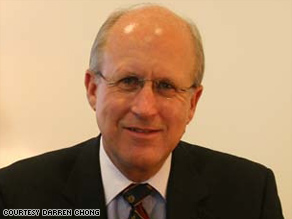
David Walker
David Walker
- C.P.A.
- -?- Coopers & Lybrand
- -?- Arthur Andersen
- 1998-2008 – Comptroller General of the United States – GAO
- 2008-?- Peter G. Peterson Foundation – www.pgpf.org/
- Peter G. Peterson, co-founder of the Blackstone Group, and former Secretary of Commerce under Richard Nixon, to lead his new foundation. wikipedia.org/wiki/David_M._Walker_(U.S._Comptroller_General)
- 2008 – Book / VIDEO – I.O.U.S.A.- by Peter G. Peterson Foundation
- [VIDEO-YouTube-01:21:29]
- The Foundation distributed the documentary film, I.O.U.S.A., which follows Walker and Robert Bixby, director of the Concord Coalition, around the nation, as they engage Americans in town-hall style meetings. Warren Buffett, Alan Greenspan, Paul Volcker, and Robert Rubin also appear. – Wikipedia
- 2010 – Book – Comeback America: Turning the Country Around and Restoring Fiscal Responsibility, by David M. Walker
- 2010-2013 – founder and CEO of the Comeback America Initiative (CAI)
- Forwards written for Books
- 2015 – Book – Guaranteed Income: A Risk-Free Guide to Retirement, by Barry James Dyke
- Forward by David M. Walker, 1998-2008 – Comptroller General of the United States – GAO
- 2024 – LinkedIn – David Walker – linkedin.com/posts/david-m-walker-9a30888_joe-penland-and-i-met-with-speaker-johnson-activity-7211789967889440768-lYlV/
- Tom Sadowski – Treasurer, Boys and Girls Club of Jefferson City
- The reason these conversations occur beyond ideology is because people don’t understand economics and how people respond to actions.
- The other issue is most data we see come from government or sources that are not unbiased.
- It would help to identify sources of reliable information that also explain what the data mean in simple, concise clear language.
- David M. Walker, Former U.S. Comptroller General – Tom Sadowski – I use GAO, CBO, and the Fed as my primary government sources. The Economist is a good global source.
- Tom Sadowski – Treasurer, Boys and Girls Club of Jefferson City
2000s
- 2008 1006 – CNN – Commentary: America’s $53 trillion debt problem, by David M. Walker – [link]
- 2009 0615 – CNN – Commentary: “Why Your Taxes Could Double,” by David M. Walker — [BonkNote] — [link]
2010s
- 2012 0607 – PHP Agency – David Walker interview with Patrick BetDavid – https://www.youtube.com/watch?v=LONgjWVyMFs
- 2012 0730 – PHP Agency – What Individuals Must Do to Save America – https://www.youtube.com/watch?v=HMwIwPH_V8w
- 2016 0817 – ThinkAdvisor.com – 4 observations: former Comptroller General David Walker, By David McKnight – [link]
- As part of this tour, Walker recently appeared on a nationwide NAIFA ClientCast where he made more prognostications about our country’s future. Here are a few excerpts from his talk, along with my comments.